The impressive entrance to Spring Grove Cemetery in Cincinnati. When passing through these battleship-like gates you know you've arrived somewhere of note. Of course, for most of the residents it's a one-way street.
I was down here recently for a meeting, and we allowed enough time to tour some of the sights. Spring Grove is the largest cemetery in Ohio, at over 700 acres, and it is probably considered as much park as cemetery. It harks back to the olden days, when cemeteries were used for picnics, weddings, and nice oases free from the hustle and bustle of the city.
We had some knowledgeable guides for our foray into the cemtery, including Ned Keller and Kathy McDonald, Judy Ganance, and Solomon Gamboa. When you're dealing with small roads winding in an abstract fashion through 700 acres, it takes a while to learn the lay of the land.
But thanks to our guides, we were able to navigate directly to some of the cemetery's highlights, including the massive white oak, Quercus alba, in this photo. It utterly dwarfs our group. The tree is several hundred years old. Although it is not the state champion (largest of its species), Spring Grove does boast an
incredible 19 state champs, some native trees, some not.
Your
narrator at the final resting place of two of Ohio's most accomplished
biologists, the Braun sisters, Annette and Lucy. I had only visited Spring
Grove a few times prior, and never had had time to track this spot down. This
time, we knew right where to go and made the pilgrimage to the Braun's final
resting spot a priority. Quite fittingly, their graves lie in the shadow of
that massive oak in the previous photo.
Although
purely coincidental, I am sure, the look and placement of the tombstones
mirrors the sisters' real life relationship. By all accounts, Lucy was more
forceful and dominant, while Annette was laid back and soft-spoken. Lucy's
headstone is bolder, and placed just ahead of Annette's paler, less conspicuous
marker.
Emma Lucy Braun, 1889-1971. She was, without doubt, one of Ohio's - and
North America's - preeminent botanists. Lucy began operating at a time when
women scarcely had a toehold in the biological sciences, and their involvement
was not often encouraged. None of this would have mattered a whit to Lucy, with
her forceful personality, and I'm quite sure she would have been successful at
whatever she had put her considerable mind to.
Lucy had many publications and other accomplishments to her credit, but this
book is undoubtedly her most famous work. Deciduous Forests of
Eastern North America was published in 1950 and instantly became
the gold standard of eastern forest ecology. It remains highly relevant to this
day.
Lucy Braun wrote three other books, and at published at least 180 papers and
articles over her career. But probably first and foremost, she was a FIELD
biologist - something that unfortunately is becoming a lost art these days. She
reveled in exploring the wilds, finding and learning plants, and attempting to
figure out the big picture. That's why her magnum opus, the Deciduous Forests
of Eastern North America, is such a standout. In it, Lucy adroitly synthesized
all of her years of field work and knowledge into a coherent dissection of a
big and complicated subject.
Along the way, she discovered a number of new plants or varieties thereof,
with perhaps the most famous being the rockhouse white snakeroot, Ageratina
luciae-brauniae. B.E. Wofford, who elevated this taxon to species level in
1976 - other botanists had probably incorrectly treated it as a variety of
another species - left no doubt about who deserved credit for the species'
discovery with his choice of scientific epithet.
The gorgeous plant in this photo is greek valerian, Polemonium reptans
L. var. villosum E.L. Braun. Lucy first recognized this distinctive
variety and published it, hence her authorship behind the varietal name. Braun's
greek valerian is a rather rare and local plant in Ohio, but it can easily be
found in Shawnee State Forest, which is where I made this photograph.
Amazingly, Annette was probably even more productive than her dynamo sister,
although she sometimes gets lost in Lucy's large shadow. Annette often
accompanied Lucy on her field trips, and many of those were to the prairies of
Adams County, Ohio, which is a biological wonderland. Annette's thing was
moths, specifically the microlepidopterans (really little moths!). Her
accomplishments in this little studied realm were staggering. Annette described
some 335 moth species to science, and published scores of scientific papers,
including four major monographs. In the world of lepidoptera, she was a true
giant.
I made this image of this tiny caterpillar in
one of Lucy and Annette's beloved Adams County prairies back on July 25, 2012,
and the obscure larva ties together the two sister's interests nicely. The
animal is known as Ethmia longimaculella,
and it is in a group of moths that was of great interest to Annette. The
caterpillar feeds on a plant that surely caught Lucy's eye, the false gromwell,
Onosmodium molle, which for us in
Ohio at least, is a rather rare prairie inhabitant. Lucy would have examined
the plant, while Annette studied its larval predators.
A romp through the diverse flora and fauna of Ohio. From Timber Rattlesnakes to Prairie Warblers to Lakeside Daisies to Woodchucks, you'll eventually see it here, if it isn't already.
Thursday, December 4, 2014
Saturday, November 29, 2014
Black-legged Kittiwake in central Ohio!
The upper end of Deer Creek Reservoir in Fayette County, Ohio, where beautiful little Deer Creek begins to become impounded by the big dam some distance to the south. Bob Royse found a Black-legged Kittiwake here on November 26, and the wayward gull is still sticking. I was finally able to run down there this morning and ogle the animal. The light never was great - the end of the day would be a much better time to shoot images from this spot - but I did what I could to record the rarity. But mostly I just watched the highly entertaining bird, for nearly three hours.
It took all of a nanosecond to find the kittiwake, seen here stretching its wing. Bob's directions and description of the scenario were spot on. The bird is fixated on a spot where a seldom-used park road comes very near the creek, and access could not be easier. I saw the bird from my car, pulled over, and set up shop. The kittiwake cared not a whit for my presence, nor that of the other birders that stopped in during the morning.
As are nearly all Ohio records of Black-legged Kittiwake, this individual is a first-year (first-cycle for some of you) bird, born this summer somewhere in the far north. Young kittiwakes are more striking and conspicuous, and easier to identify, than are the adults.
The kittiwake takes a bath. I always marvel over the cold hardiness of birds such as this. It was below freezing upon my arrival, and that water is frigid indeed. The gulls are unfazed.
Black-legged Kittiwakes breed in the far north, from about the latitude of southern Alaska to points north. They are normally birds of the oceans, breeding along sea cliffs and wintering at sea. Small numbers, nearly all juveniles, do make "wrong turns" and end up inland, as this bird did. A smattering of the population migrates through the Great Lakes, and most of our kittiwake records come from Lake Erie. Birds well inland from our Great Lake are rare indeed, hence the exceptional nature of Bob Royse's find.
Several dozen Ring-billed Gulls, like this beautiful adult, were also in the area. Every now and then, the flock of ring-bills would barnstorm upstream to where the loner kittiwake hung out, and commence a feeding frenzy. Apparently there were occasional schools of small fish that were coming to the surface, and the gulls would begin dive-bombing the water. Their entry smacks could be heard some distance away. The activity would stir the kittiwake to action, and in short order it would capture four or five fish. I would love to know what the plentiful piscine prey is, but try as I might, I could never get a good image of one of the birds with its fish. From what I could tell, they are probably one of the larger shiners, perhaps spotfin shiner.
The kittiwake did not much care for the Ring-billed Gulls, and generally kept its distance. As kittiwakes breed far to the north of the range of the much more southerly Ring-billed Gull, these may have been the first of their kind that the young kittiwake had interacted with.
Our protagonist was somewhat more hospitable to this smaller Bonaparte's Gull (on right). The Bonaparte's seemed to want to hang with the kittiwake, but we noticed that its efforts to perch atop the same rock as the kittiwake were soundly rebuffed.
A young kittiwake is highly ornamented with black markings. Although you may throw your hands up at gull identification, as do many birders, there should be little problem in identifying one of these distinctive beasts.
In flight young kittiwakes show a bold black M, or perhaps W, pattern on the upper wings. The big smudgy-black collar and dark tail tip bookend the wing pattern, and create a showy pattern that causes a kittiwake to pop from the crowd of gulls.
I made this image back in 2010, on St. Paul Island in the Bering Sea far off Alaska's coast. The clean gray and white adult Black-legged Kittiwakes construct a large fancy nest made primarily of mosses plucked from the tundra. There cannot be many other gull species whose young are raised in such luxury.
It would be very interesting to know where the Deer Creek kittiwake originated. To be sure, it was spawned in a situation similar to the photo above, quite possibly along the Arctic Ocean of eastern Canada. Our rare visitor has probably traveled at least 1,500 miles from the north to thrill birders here in central Ohio.
Tuesday, November 25, 2014
Northern Shrike, aka "Butcherbird"
Big fluffy cumulus clouds drift across a blue prairie sky. This is one of my favorite places in Ohio, Killdeer Plains Wildlife Area in Wyandot County. I've been coming here since I had a driver's license (before, actually) and have made scores of trips to Killdeer over the years. It's only about an hour from my house, so if time is tight and I need a short trip, this is often my destination. Rare is the trip to Killdeer Plains that doesn't produce something exceptional, no matter the time of year.
Tall prairie grasses lit golden by the sunset. Killdeer Plains is a 9,000+ acre remnant of the Sandusky Plains, which was a massive swath of prairie that blanketed parts of Crawford, Hardin, Marion, and Wyandot counties in north-central Ohio. Once John Deere devised a tool capable of busting the thick prairie sod, it didn't take people long to figure out that this was some of the richest soil to be found. In the relative blink of an eye, farmers transformed the staggering botanical diversity of the prairie into a vegetative triad: corn, soybeans, and wheat.
Probably over 99% of Ohio's original prairie, which may have once covered 1,500 square miles, has fallen to the plow or other development. That makes remnants such as Killdeer Plains all the more important. Birds, in particular, "remember" the prairies. It hasn't been that long since we pulled the habitat rug out from under their feet, and it seems that species that favor prairie habitats still are genetically encoded to use the former prairie areas as way stations, wintering grounds, and nesting areas.
A messy, scraggly pin oak stands alone in one of Killdeer's prairie meadows. It is a great perch tree, and many a raptor has probably used it as a lookout. That's not a raptor teed up atop the tree in this photo, but it might as well be. To songbirds, small rodents, and in season, large insects, that silhouette is the grim reaper incarnate. A Northern Shrike.
Killdeer Plains is a reliable spot to find shrikes in winter, and on a recent visit, I found a few. Two species of shrike occur in North America, and both turn up in Ohio. The southerly Loggerhead Shrike, Lanius ludovicianus, once was a fairly common and widespread breeder throughout the state. Its fortunes have waned, and Loggerheads are now quite rare here.
The shrike of the north is this species, the Northern Shrike, Lanius excubitor, which is an uncommon winter visitor, mostly in the tier of counties buffering Lake Erie. Scattered individuals turn up inland, with Killdeer Plains probably being the best such place to find them.
Loggerhead and Northern shrikes look similar, and can be tough to separate, especially if one does not have much comparative experience with the two. This photo shows two characters of the Northern Shrike: the underparts are faintly but noticeably barred, and the black bandido mask is broken or diminished on the forehead, over the bill.
I was quite surprised to discover two shrikes, together, on my recent visit to Killdeer. These birds normally seem to be quite antisocial, excepting a breeding pair. I had apparently fortuitously stumbled into a border dispute. The two birds lunged, attacked, and scolded one another from the tops of tall cottonwood trees as they attempted to work out the edges of their territories.
When I returned to this area later in the day, one of the shrikes was conspicuous as it perched atop prominent trees, but the other was not to be seen. I suppose it was forced to move to a distant patch of turf. They're both probably still within the wildlife area, and likely will be until spring.
While there is an Australasian family of birds in the genus Cracticus that are officially known as butcherbirds, the shrikes are our "butcherbirds". They've earned the nickname. It is also reflected in the genus name Lanius, which means "a butcher". The shot above shows a meadow vole draped unceremoniously from a thorny tangle of autumn-olive branches. I was helping to lead a field trip at the Wilds a few years back, when we observed a Northern Shrike laboriously toting this hefty rodent into the shrubs. After it departed, we of course rushed over to see what had become of the vole. Its neck vertebrae had been snapped by the shrike's raptorlike bill, and later the shrike undoubtedly returned to tear the beast asunder as it hung from the branches as if suspended by a butcher's hook.
At least by human standards, shrikes are easily our most brutish songbirds. They are fierce indeed, and have been known to attack birds as large as a Blue Jay. It is always a treat to find a shrike, and they are interesting to observe. Killdeer Plains is obviously a good bet, and the Wilds generally has a shrike or two each winter. The Ohio Ornithological Society hosts their annual Birding at the Wilds event on January 17th. That's always fun, and might produce a shrike. Details will eventually be posted HERE.
Monday, November 24, 2014
Progress = Cinnabons!
Western North Dakota, just north of the small town (pop. about 1,750) of Watford City. All of those square or rectangular pale patches are fracking pads. The boom is on in the Roughrider State (so nicknamed to help promote tourism), and has been for the last eight years. In spite of ranking 48th among the states in overall population, North Dakota boasts the nation's best economy, and lowest unemployment rate. Want to rent a four bedroom modular home in Watford City? Be prepared to shell out up to $4,000.00 - a month! The high times are here.
This growth has come with a steep price. The New York Times has published a series of articles detailing the woes of the Bakken Shale boom; you can (and should!) read them RIGHT HERE. Thousands of wells pepper western North Dakota's landscape, and in addition to an oil and gas bonanza, they've brought lots of problems. Pollution, corruption, cronyism, catastrophic accidents, habitat destruction, and spills - lots of spills. An estimated 18 million gallons of toxic sludge has spewed into unwanted places in the last eight years.
Reporters Deborah Sontag and Robert Gebeloff seem to have done a thorough job digging the Bakken dirt, and drilling down into the seamy substrate of this shale boom. A veil of secrecy masks much of the information related to drilling, but they did unearth lots of facts, and got some tasty interviews with various officials.
One of their interviewees was Ron Ness, the president of the North Dakota Petroleum Council. Ness states that "...there wasn't a damn thing..." in pre-boom Watford City and vicinity. He goes on to regale the reporters with the benefits of the fracking boom: "We've got the largest-producing Cinnabon anywhere in the world".
Well. Who can argue with that for progress, and a surefire sign of economic growth. Cinnabon, that sugary fat-laden elixir of the turnpike plazas, whose staple Cinnabon Classic packs a whopping 880 calories and 36 grams of fat.
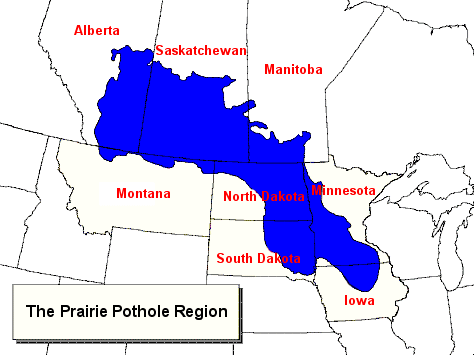
The prairie pothole region, North America's duck factory and an Eden of biological diversity. North Dakota is full of pothole wetlands and vast expanses of prairie, all cranking out birds galore. The annual North Dakota Potholes and Prairies Birding Festival bears evidence of the extreme birdiness of this state. CLICK HERE for their website and a list of the spectacular bird diversity.
But stippling the prairies with well pads is progress, apparently. And progress can be measured by Cinnabon sales.
Saturday, November 22, 2014
Some encounters with mammals
A herd of Bison grazes the vast grassy plains of the Wilds in Muskingum County, Ohio. Their captive herd seems to be expanding, and there were a number of bisonlets among the ranks, so reproduction must be going well. The scene offers a tiny snapshot of the days of yore, when countless thousands of Bison roamed the Great Plains.
Participate in the upcoming Chandlersville Christmas Bird Count on December 20, which covers the Wilds and surrounding areas, and you can marvel over the massive Bison, too. Details about the bird count are RIGHT HERE.
I have noticed that people have an inordinate interest in mammals, and most Homo sapiens will gawk at something like this huge Bison before casting their eyes to, say, a Winter Wren or Henslow's Sparrow. I think this tendency is hard-wired, as after all other mammals are closer to us on the evolutionary tree than other groups of organisms. Also, mammals - at least large ones - can mean one of two very important things: food, or danger. It is still in our nature to keep our eyes on them.
While we were watching those Bison from a distant perch, this proud eight-point buck White-tailed Deer was watching over his harem in another field. Suddenly a lesser buck appeared on the horizon, and this stud instantly went on alert. Notice how its fur is raised, much like an angry cat, and that snowy white flagtail is at full mast.
Apparently not intimidated by the larger buck's signs of aggression, the lesser buck (foreground) charged forth. But, Jr. Buck was chasing after a frisking doe, so perhaps he wasn't thinking too clearly. By the time it reached this fence, the bigger buck had also made its way to the fence, ready for an encounter. I was hoping one or the other would leap the fence and really mix it up, but that was not to be. Still, after a bit of snorting about they did ram antlers - HARD - right through the fence. The crack was clearly audible from our observation point some distance away.
While the Cervidian standoff depicted above was taking place, this gorgeous Coyote trotted into view. I saw a furtive movement from the corner of my eye as the wily one briskly trotted through high vegetation down a hillside and towards the deer. It was rather far, and I didn't think it knew of our presence. As if to disprove that notion, it stopped and turned to gave me a baleful glare, letting me know that yes, it did indeed know that the dumb biped was watching.
The Coyote kept a direct course towards the younger buck, which was on its side of the fence. The deer quickly became aware of the interloper, and began moving off. I was hoping for some sort of strange encounter, and stood ready to photo-document it, but nothing doing. I suspect the 'yote was just passing through - can't imagine it would have taken on a deer that size, but the scene made for great wildlife watching.
A Mink carries a giant half-eaten bullfrog. This one was a stroke of great luck. I was standing along a marsh at Killdeer Plains Wildlife Area in Wyandot County, photographing two Northern Shrikes mixing it up in a tall cottonwood tree. I had my camera mounted on a tripod, with the 500mm lens with 1.4 extender, making it a 700mm. Just as with that Coyote, a movement in the grasses caught my eye, and I looked over to see the Mink tearing across the dike.
Shrikes temporarily forgotten, I whirled the camera onto the Mink and began clicking away. It still apparently hadn't seen me and was loping right to my spot. Unfortunately, I was somewhat over-lensed given its close proximity, and only managed this one keeper shot. The mild haze in the foreground is due to some grass blades between me and it. The photo was shot at just about the same time that it saw me, and clicked into high gear. Like a supercharged furry slinky, it bounded into dense cattails never to be seen again.
Subscribe to:
Posts (Atom)