Sunday, July 31, 2022

Nature: Everything's coming up rabbits, thanks to 2022 bunny baby boom


A young eastern cottontail in the writer's Worthington backyard/Jim McCormac

Nature: Everything's coming up rabbits, thanks to 2022 bunny baby boom

Columbus Dispatch
July 31, 2022

NATURE
Jim McCormac

One of our most familiar mammals is the eastern cottontail. It is also one of the most prolific mammalian reproducers. Apparently, the rabbits have been hard at work, as there seems to be bunnies hopping everywhere this year.

Just about everyone that I’ve asked has seen lots of rabbits, probably more than normal. So have I. My local cottontails have been above average in producing kits, and they are a daily feature of the yardscape. One magical morning, I glanced out back to see six — two adults and four little ones — gamboling around.

Last spring, I saw their incredible courtship display on several occasions. A buck and doe will square off, acting tense and jerky. Sometimes the doe, apparently irked by the amorous buck, will literally rabbit-kick it with her front paws. This can stimulate the male to charge and spray urine at her — a dating strategy perhaps best left to the bunnies.

Soon they’re rushing one another, with a rabbit springing straight into the air like a furry pogo stick. Sometimes the airborne bunny will twist 180 degrees in mid-flight so that it’s facing the other rabbit upon landing.

The jumping exhibitions are interspersed with chases and other high-speed antics. This is all a precursor to making more bunnies, something that rabbits are quite good at. Cottontails are prolific breeders, with females able to produce five or more litters of up to eight kits, each season. Some of those kits will produce litters in their first year. It doesn’t take a mathematician to realize that we could quickly be awash with rabbits.

This is where the predators come into play. Rabbits might be thought of as hopping steaks, at least if you’re an animal that likes to eat them. And plenty do, including coyotes, foxes, hawks, owls and weasels. Tiny kits still in their ground nest are especially vulnerable, and crows and raccoons often prey on them.

I once came across a great horned owl on a rural Ross County lane about 2 a.m., sitting atop a freshly killed rabbit. The enormous owl glared ferociously at me, refusing to relinquish its prize, a testimony to its tastiness. Finally, it dragged the carcass up the steep road bank, the rabbit apparently too heavy to get aloft. I passed by, the owl skewering me with its huge yellow eyes.

I’m not sure what happened this year to trigger such an apparent rabbit boom. Perhaps I’m misreading the situation, but I’ve seen bunnies galore about everywhere I go — and I do travel a lot. Even a trip to the prairies of western Indiana and adjacent Illinois produced scads of rabbits. These observations, coupled with numerous similar reports from other observers, lead me to believe that 2022 was an exceptionally good year for cottontails.

Perhaps certain predators, especially coyotes and foxes, are down in numbers. These wily hunters are exceptionally adept at picking off rabbits.

Gardeners might find themselves stocking the rabbits’ table more than usual. But green thumbs can take solace in knowing that the fuzz-tailed plunderer is one of our most interesting and successful animals, and that the rabbit has hopped on Earth for far longer than humans have been around.

“My point is that when you look at a bunny and can only see a pest, or vermin, or a meal, or a commodity, or a laboratory subject, you aren’t seeing the bunny anymore.”

— Matthew Scully, author

Naturalist Jim McCormac writes a column for The Dispatch on the first, third and fifth Sundays of the month. He also writes about nature at www.jimmccormac.blogspot.com.

Friday, July 29, 2022

Hummingbirds and Royal Catchfly


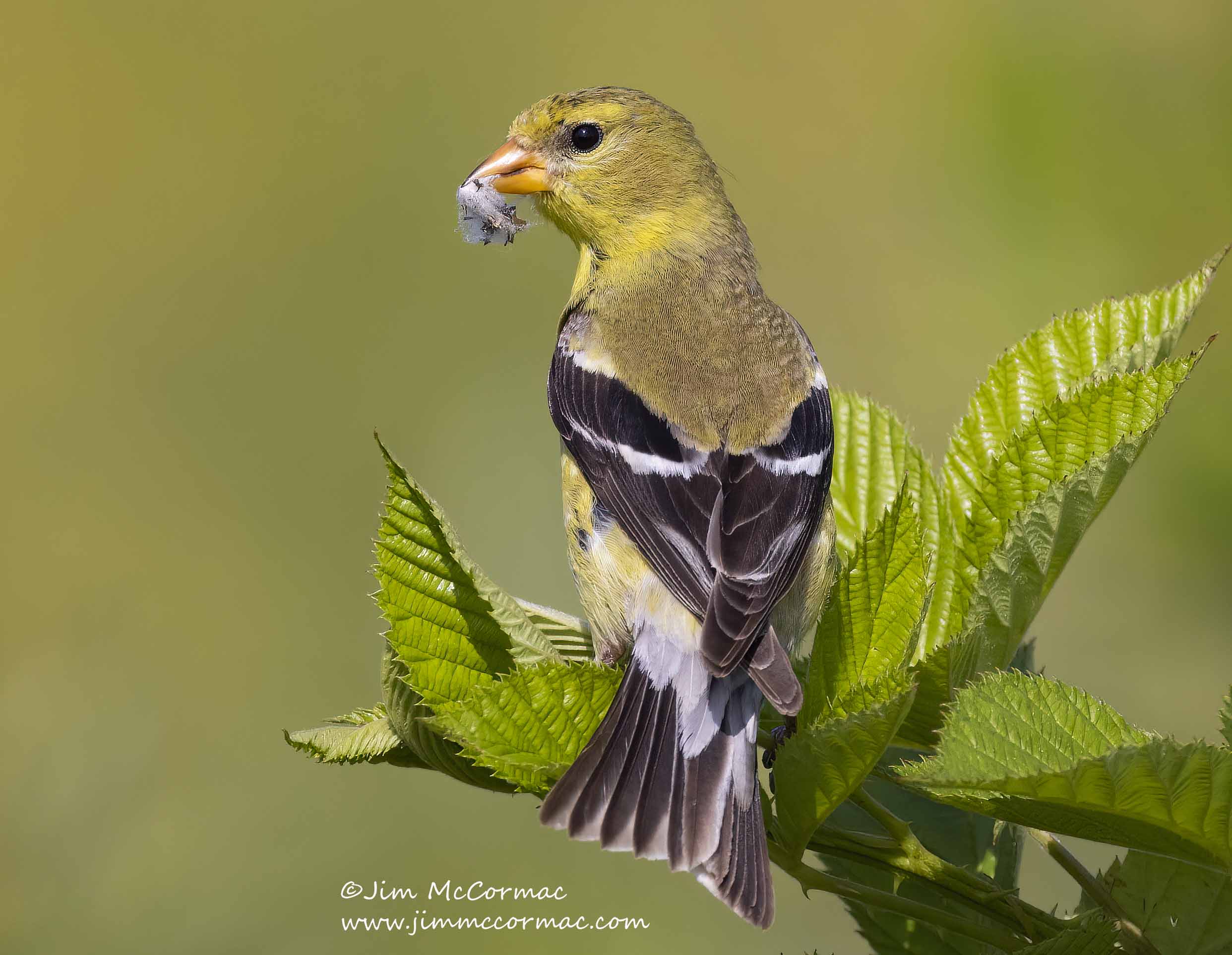
A female American Goldfinch (Spinus tristis) with a bill full of plant down. The vegan "wild canaries" are late nesters, with July and August peak breeding months. This one was building a nest in a nearby thicket. The colorful males do not assist. They are too busy chasing one another and delivering their impressive sky songs. While so engaged, the male arcs lazily about with slow shallow wing beats, all the while gushing forth an exceptionally ebullient song.

I photographed that goldfinch at Huffman Prairie during a visit on July 22. The 100-acre prairie is at its colorful peak from mid0July into August, and one of the botanical showstoppers is Royal Catchfly (Silene regia). This statuesque prairie plant attracts a very special little bird, and my main mission was to shoot them at catchfly plants.

A female Ruby-throated Hummingbird (Archilochus colubris) approaches a Royal Catchfly. It is thought to be the catchfly's only effective pollinator. The brilliant red flowers are irresistible to hummingbirds, and the sprites swarm Huffman Prairie at this season. Battles over catchfly are frequent. More than a few times I would have a hummingbird in my sights, ready to snap away, when another hummer would roar in and punk my subject. A speedy aerial chase would ensue, with the combatants sometimes spiraling high into the air.

I arrived not long after dawn, and it didn't take long to spot a hummingbird. My modus operandi here is to find a nice patch of catchfly, with at least a few unobstructed exceptionally tall catchflies towering above the snarl of colorful prairie wildflowers. One does not normally have to wait long for photo ops in such a situation. Shooting hummingbirds visiting the red-flowered catchflies wasn't too tough on this day, but I had a more challenging goal in mind.

Mission accomplished! A Ruby-throated Hummingbird visits the flowers of a very rare pink or salmon-colored form of Royal Catchfly. This variant is exceedingly scarce, and even at Huffman Prairie with all its catchfly, probably only 1 percent or less of the plants are this form.

To expand upon my tactics outlined above, I try to find a large, pink-flowered catchfly surrounded by typical, red-flowered plants. Such a situation offers the best of both worlds. I will likely snag images of the birds at red flowers and may get the opportunity to shoot them at the rare form as well. And luck was with me on this day, and I got both types of shots.

PHOTOGRAPHY NOTES: I shot these images with my Canon 800mm f/5.6 on the Canon R5 mirrorless body, mounted on a Gitzo tripod with Wimberly head. The R5 has made such tasks easier. Its Auto Intelligence focusing feature grabs moving subjects with astonishing rapidity and locks onto them. Even fast-moving hummingbirds. The big lens allows for a fairly expansive swath of habitat to be covered. I can work out to around 30-40 feet in any direction and even at the outer reaches of my sphere, get usable images. As hummingbirds are nearly fearless, they will sometimes come into plants well within my lens's minimum focus of 19 feet. Sometimes birds will come within 5 feet! Occasionally a hummingbird will roar in and hover about eye level and remain there for a few seconds, staring at me. I suppose they are trying to figure out what the large biped with the funny gizmo is doing in their prairie.

Anyway, flash is key when shooting hummingbirds as it helps freeze movement and causes the birds' feather iridescence to pop. I use a Canon 600mm speedlite and a Better Beamer flash extender. The fresnel lens of the latter can throw usable light out about as far as I can shoot the hummers. I learned of a new peril involving fresnel lenses on this day. At one point I small an acrid burning odor. As there is a gun range in the distance, I thought it might be the smell of discharged firearms drifting over. No. I had left my camera rig pointing so the sun was shining right through the fresnel lens. Like a magnifying glass it greatly amplified the sun's rays causing my lens's camouflage lens coat to start smoldering. Easy fix: just remember not to align the Better Beamer with the sun.

Camera settings were mostly ISO 800 to 100, 1/4000 shutter speed, and f/8. The flash must be set to high-speed sync mode, of course, to allow it to function at shutter speeds beyond the sync speed of 1/200. The trade-off of going faster than sync speed is a great drop-off in light output from the flash. Enter the Better Beamer. Its light amplification allows one to throw the light far afield and hit distant objects.

Wednesday, July 27, 2022

Addendum to last post: Orchid/moth photo safari

My orchid-pollinating moth rig stands ready. In my last post, I shared photos of the beautiful albeit elfin Small Green Wood Orchid (Platanthera clavellata). As noted in that post, this orchid species has been shown to be largely or at least partially self-pollinating, but insect pollinators surely visit, at least on occasion. At least one known hybrid makes that clear. Well, I couldn't stop thinking about this and was eager to try to see if any moths - the most likely pollinators by far - might visit these orchids. As the pair of plants that I shared in the last post were quite large for this species, and in perfect condition, I decided it was now or never (at least until next year).

So off I went last evening, arriving at the west-central Ohio locale shortly before dusk. Moth pollinators are often crepuscular, visiting flowers at dusk or soon after. See THIS POST for an example of a similar hunt in which I met with success.

The photo above shows my camera rig, set up and ready to fire and affixed to my Gitzo tripod. It is pointed and focused on the orchids, which are near the base of the trees. It's a Canon R5 mated to a Canon 400mm f/2.8 II lens, coupled to a 50mm extension tube. That gets the minimum focus down to about six feet. A Canon 600 speedlite provides illumination, and it's equipped with a Better Beamer flash extender. That unit's fresnel lens magnifies the flash output, allowing light to be thrown further - a necessity when shooting fast shutter speeds in high-speed sync mode. Settings were 1/1000, f/8, and ISO 1000, which gave a good exposure in very dark conditions.

Here's a shot of my target, the lush inflorescence of a Small Green Woodland Orchid. Note the luminescent greenish/whitish/yellowish flowers with greatly elongate nectar spurs. These features strongly suggest moths as pollinators.

Conditions were perfect: absolutely no wind, warm, and humid. As evidence of the stillness, I made the above shot without flash - it was nearly dark - at f/18, ISO 200, and a whopping 13 second exposure. Try that with even the slightest breeze. I generally do not care for the look of flash on flowers. It can impart a harshness not in keeping with the subject's qualities. But when shooting fast-moving moths at flowers, in the dark, flash is essential.

What I would have given to have had a moth in a shot with the orchid. Alas, it was not to be.

A big female fishing spider in the genus Dolomedes was one companion on my nocturnal vigil. She carries her egg sac underneath her body, and the tarantula-sized spider is a formidable defender of her spawn.

As dusk darkened into true night, more creatures of the night emerged. Such vigils, even if "unsuccessful" regarding the goal, are always interesting. Early on I had a moment of hope when some smallish sphinx moth rocketed in and began pollinating nearby Spotted Phlox (Phlox maculata). It got within ten feet of the orchids and I had great hopes it would visit them. No go. As it got darker, ever more moths began flying, but none displayed interest in the orchids.

I packed it in a bit after 10:30 pm, but not before being treated to many interesting creatures of the night. A big old Raccoon came ambling down the trail, got within ten feet of me, and decided to do an about face and reverse course. A pair of Great Horned Owls duetted back and forth at close range, the deeper more resonant hoots of the male alternating with the female's higher pitched hooting. I later saw one of the birds atop a phone pole in my headlights on the way out. A Barred Owl screamed repeatedly at one point, which triggered a classic Who-cooks-you, all! response from its mate. A steady chorus of frog-like chirps came from nearby Northern Mole Crickets. The strange orthopterans are mostly subterranean and even sing from within their burrows. The walk out involved traversing a wet meadow, which was full of the amusingly named Slightly Musical Conehead, their rough "songs" the most conspicuous sound in the damp field.

I don't know if I'll get around to going for moths at Small Green Wood Orchid again. Such a photo would certainly be a challenge. Because of the plant's ability to self-pollinate, perhaps not many insect pollinators visit. Or maybe moths tend to come to the flowers in the wee hours, or just prior to dawn or in the early morning hours, as in THIS CASE. Trying for photos such as this can involve a lot of luck, a lot of time, or more likely a bit of both.


Tuesday, July 26, 2022

Small Green Wood Orchids

A pair of Small Green Wood Orchids (Platanthera clavellata) in perfect flower on a mossy tree base. The larger one towered to about 6-8 inches in height. Not much is known about its pollination biology, but moths are almost certainly the pollinators. These plants are in a west-central Ohio woodland, about 45 minutes west of Columbus. I made these images yesterday afternoon.

This little orchid is scattered in small populations, and rather rare from my experience. But it is certainly overlooked. Platanthera clavellata flowers in shady haunts in the heat of mid-summer, and such habitats probably are not as well botanized as they should be at that season. Mosquitoes help to drive botanists from such sites, along with the heat and humidity.

A close-up of the inflorescence, which is heavily laden with tiny flowers in perfect condition. Note the luminescent whitish cast to the flowers, and long tubular nectar spurs. Both features select for moths. But which moths? Well, the mystery thickens. The great botanist Asa Gray was the first person to figure out that P. clavellata is at least partially self-pollinating. Pollen germinates within the pollinia (pollen sacs) and then grows downward into the stigma (female receptacle).

That said, this orchid's flowers are tailor-made for moth pollination. The luminescent greenish-white color would be highly visible in darkness, and those very long nectar spurs (the slender tubes trailing from the flowers) are typical of orchids that favor pollination by moths with long probosci. Furthermore, there is at least one known case of hybridization. The great orchidologist Fred Case, at the University of Michigan, found a hybrid between this species and White-fringed Bog Orchid (Platanthera blephariglottis). Thus, pollinating insects must sometimes visit, and they would almost certainly be moths.

As evidence of the luminosity of the flowers, I shot these images on a bright overcast day, but the orchids were in full shade. Exposing at neutral on the meter rendered completely blown out - overexposed - images. It was necessary to underexpose by about two full stops to get a correct exposure. It's almost as if the flowers are plugged into an outlet and glowing.

If time allows, I hope to get back to these plants around dusk, and watch them into nightfall, to see if moths do visit. And if so, try to capture them on pixels and hopefully identify them. 

Wednesday, July 20, 2022

The Common Yellowthroat, a creative singer


A Common Yellowthroat atop his singing perch, the unfurling leaves of Stiff Goldenrod (Solidago rigida). The masked bandidos sing a distinctive wichity-wichity-wichity song. Better yet is their aria, the incredible flight song. It's as if the little warbler, with an irrepressible need to flaunt its song, can no longer remain earthbound and hidden in the thickets. In a fit of irrational exuberance, it launches skyward, all the while singing its song but now embellished with accent notes and complex flourishes. At its apogee, the yellowthroat drops directly back to earth, legs dangling and wings fluttering, singing all the while. Huffman Prairie, Greene County, Ohio, yesterday.

Monday, July 18, 2022

Featherfoil makes a reappearance

A featherfoil floats in a Scioto County swamp/Jim McCormac

Featherfoil makes a reappearance

Columbus Dispatch
July 17, 2022

NATURE
Jim McCormac

About 1,800 species of native plants have been found in Ohio. This ornate botanical tapestry forms the underpinnings of ecological communities, and as such, bears close watch.

Plants are the building blocks that transfer energy into much of the animal world, and most animals that we see and enjoy depend upon them either directly or indirectly.

Beginning in 1980, the Ohio Department of Natural Resources’ Division of Natural Areas and Preserves (DNAP) has maintained the official listing of the state’s rare flora. It is updated biennially and decisions are not scattershot. To be listed as endangered or threatened, a plant must meet specific criteria.

Furthermore, a respected body of knowledgeable Midwestern botanists — from Ohio and several surrounding states — convenes every other winter to hash out changes to the list.

The current Rare Native Ohio Plants Status List includes 254 endangered, 165 threatened, and 104 potentially threatened species. The latter category is a watch list, species that botanists feel are declining or rare for other reasons, but do not yet have enough evidence to warrant a higher category of imperilment.

Another category is perhaps the most lamentable: the 86 extirpated plants. These are species that once occurred in Ohio but have not been seen for over 20 years. Some of these plants were once at least locally common, others probably always rare with a tenuous foothold within the boundaries of our state.

Reasons for extirpation are many. Habitat destruction is the biggest, but others include habitat degradation, loss of pollinators, changing climate and invasive plants. Two hard-hit habitats are prairies and wetlands. Perhaps 5% of Ohio was prairie prior to European settlement, now less than 1% remains. Five million acres of the state was wetland, about 91% has been lost. Many plants have vanished as well.

When an extirpated plant is rediscovered, it is akin to a botanical phoenix rising from the ashes. Such was the case in May 2017, when DNAP botanist Andrew Gibson visited a small, swampy pool on an Ohio River terrace in Scioto County. To his surprise and delight, a plethora of one of America’s oddest primroses was vigorously blooming.

Andrew had rediscovered featherfoil (Hottonia inflata). Chance favors the prepared mind, and Gibson knew this was an old site for the plant. It had last been documented there in 1981. Many botanists, this author included, had checked the site routinely for decades. While some of us held faint hope that featherfoil would reappear, no one was holding their breath.

When I saw Andrew’s report, I soon visited the site. It was invigorating to cast eyes upon a holy grail of plants. Making the experience greater was the sheer coolness factor of featherfoil. A floating primrose! The plant is a winter annual and germinates in fall. It grows in damp mud or shallow water over winter, then springs to the surface and flowers in May.

Featherfoil leaves are filamentous segments clustered at the plant’s base and mostly submerged. Small white flowers adorn the stems in well-separated whorled tiers capped with a dense terminal cluster. But the stems themselves are fantastical. Thick and swollen, the air-filled tissues arise from a common base and allow the plant to float.

The whole shebang resembles a vegetative buoy, anchored to the substrate with a fibrous root system. Its appearance is surreal.

It is hard to say why the lengthy gaps between blooming periods. The tiny seeds clearly seedbank well, sequestered in the mud until conditions are suitable for germination. It might be many years or even decades between blooms. Fortunately, this small pond still provides good habitat, at least in some years.

Featherfoil has a sporadic and widely scattered distribution in 27 states, mostly along the Atlantic and Gulf coastal plains, and up the Mississippi River and its larger tributaries. It is listed as being in some degree of imperilment in 22 of those states. The gorgeous floating primrose is not just rare in Ohio.

I met the landowner and, fortunately, he is interested in the plants and the protection of their wetland. This bodes well for future conservation of one of our rarest plants.

Naturalist Jim McCormac writes a column for The Dispatch on the first, third and fifth Sundays of the month. He also writes about nature at www.jimmccormac.blogspot.com. 
Wednesday, July 13, 2022

The Harvester, North America's carnivorous butterfly!

A gorgeous Harvester (Feniseca tarquinius), one of our most interesting butterflies. And in my opinion, one of the showiest. On a July 11 trip to a Hocking County, Ohio wetlands, it didn't take long to encounter the tiny butterfly. I had just wheeled up a short dirt road in my Jeep and exited the vehicle when Karen, my photographic partner this day, pointed it out on the dusty back window.

Yes! I see very few Harvesters and miss them entirely some years. Populations tend to be small and quite localized. The difficulty in detecting them lies in part with their feeding habits. In the butterfly stage, Harvesters shun flower nectar, as apparently the stubby proboscis is ineffective at reaching nectar, which is often warehoused deep in flowers. Instead, they tap minerals from damp gravel or other places such as my dirty Jeep window. When not feeding, the butterflies often rest on leaves in very shady haunts where it would be hard to notice them.

A close look at the ornate head and headgear of the Harvester. This one was quite fresh and looking sharp. If that's all the further its proboscis extends, I can see why it has trouble plumbing blossoms for nectar.

Now to the carnivorous part. These weird things are Woolly Alder Aphids (Prociphilus tessellatus) and they're on - surprise - the branch of an alder. Specifically, the Hazel Alder (Alnus serrulata). Sure enough, when I glanced over to the bank of a nearby stream, there were alder trees hugging the edge and we nearly instantly saw aphids.

This group of aphids is tightly clustered together as they often are, and actively exuding "honeydew" droplets. Two fresh drops can be seen on the far right side of the aphid colony. Harvester butterflies partake of aphid honeydew and are seldom found far from aphid colonies. But the aphids - and the Harvester uses a variety of aphid species that in turn rely on various plant hosts - are far more important to the Harvester's life cycle than just providing nutrient-rich honeydew for the butterflies. Unbelievably, their caterpillars eat them. An aphid-eating caterpillar and thus truly carnivorous, forsaking the vegan fare of most caterpillars. It's often said that the Harvester caterpillar is North America's only carnivorous caterpillar, but I don't think that's true. Butterfly caterpillar, maybe. But when the vastly more speciose moths are taken into account, there surely must be carnivorous moth cats out there. Some, such as the Planthopper Parasite Moth (Fulgoraecia exigua) come close by tapping body fluids from host animals.

I have yet to see a Harvester caterpillar and despite searching all of the little aphid colonies on these alders, came up dry. They are cool-looking larvae - I HAVE seen photos - and slowly eat their way through the aphid colonies. Young, or early instar caterpillars, are even said to use silk that they spin to pin down victims making it easier to nosh on them. Apparently, the caterpillars can be tough to spot as they often become coated with the white waxy deposits that bedeck the aphids. Sort of like wearing an aphid-mimicking ghillie suit that makes the cats harder to detect.

A carpenter ant in the genus Camponotus tends to the aphids. Almost all of the aphid colonies we saw had their complement of ants. They are after the honeydew and seem to become quite protective of its source. Several times, when I used a finger to manipulate the twig for better images, ants rushed me and scrambled onto my fingers. I'm sure if I had dallied in removing them, they'd have commenced chomping my flesh.

Apparently, many aphids create sound via specialized organs, and this attracts ants. Why would they do so? Perhaps because ants can be voracious predators and might ward off would-be aphid attackers to protect their honeydew stash. Then how do the Harvester caterpillars infiltrate these warrior-like guards? At least one study shows that the caterpillars also create sounds, and this might confuse the ants. It's possible chemical trickery by the cats also lulls the ants into thinking the butterfly larvae are just strange-looking aphids. I'm not sure all of this aphid/ant/caterpillar business has been worked out, but even with what we know, it's a fascinating story.

I am left with a few Harvester photographic bucket list items. Foremost is finding a caterpillar. As this site is not very far away, and I am routinely in that area, there should be more chances this year. Harvesters produce 2-3 broods annually so there should be more larvae in the offing. Two, I want a photo of a Harvester tapping aphid nectar. That will take either much luck, or most likely a lot of patience and time. Three, I'd like to find a chrysalis and ideally an egg. Then I would have pretty much the entire Harvester life cycle on pixels. Such tasks can often take years to accomplish, though.