Photographic Note: Reds in flowers can be tricky to expose properly (as can yellow). It's easy to overexpose them, and thus wash out the gorgeous hues that make red flowers so fetching. Depending on the conditions, I often underexpose a bit, maybe 1/3rd stop, sometimes more. Wind is also not the flower photographer's friend, and as I recall this was a mostly windless day. Thus, I shot from a tripod with a 2-second timer delay (so I am not touching and possible moving the camera at the time of exposure). I also have the camera (Canon R5) set to touch screen focus. I just touch the spot that I want to have as the focus point on the camera's back screen, and Voila! Two seconds later the camera fires, focused on the exact spot that I touched. I'm also partial to very open apertures when I feel that I can get away with them, as f/4 (in this case) creates such a beautifully blurred background (bokeh). f/4 to f/7.1 are favored flower apertures although I will frequently venture off that reservation. ISO, of course, is set very low - 200 in this case. For floral photography, shutter speed is largely irrelevant to me, especially if there is not movement on the subject's part. This image was shot at 1/25 but I have often shot flowers at speeds as low as several seconds.
A romp through the diverse flora and fauna of Ohio. From Timber Rattlesnakes to Prairie Warblers to Lakeside Daisies to Woodchucks, you'll eventually see it here, if it isn't already.
Thursday, November 2, 2023
Cardinal-flower, and the coming floral hiatus
Sunday, October 29, 2023
Nature: "Tis the season to spot dark-eyed juncos in central Ohio
October 29, 2023
Jim McCormac
− John James Audubon (1831)
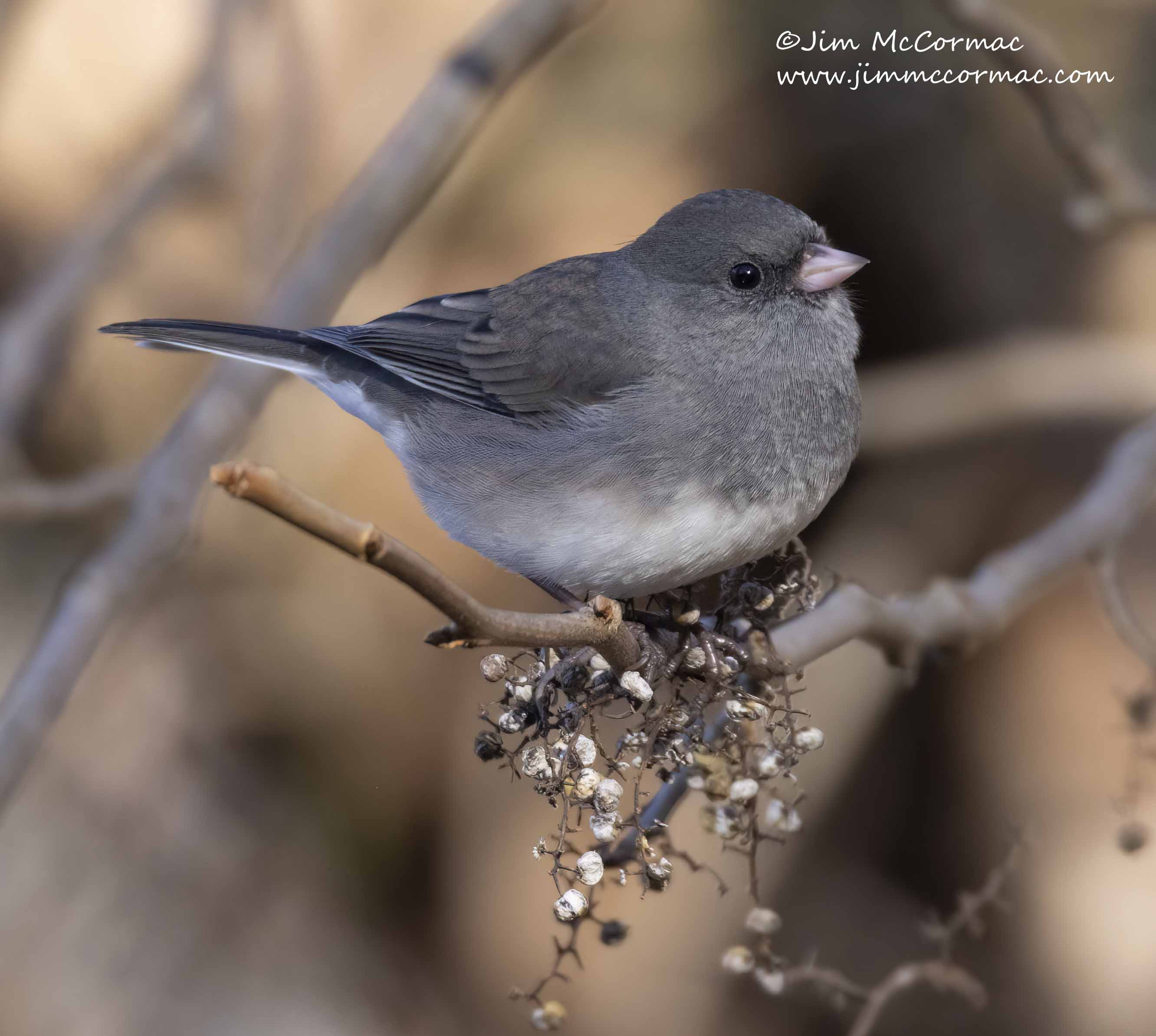
I suspect the great naturalist and pioneer ornithologist was optimistic in his estimation of junco familiarity. His “snow-bird” is now formally known as the dark-eyed junco, and back in Audubon’s time, people were far more attuned to the environment. Many if not most people probably were acquainted with the jaunty slate-colored sparrows.
Even today, with the popularity of bird feeding, lots of people know the junco. But in central Ohio, they’re primarily winter visitors. Juncos arrive on the first gusts of nippy fall winds from northern breeding grounds. I ran into my first dark-eyed juncos of fall just a few days ago, as nighttime temperatures began to dip towards the freezing mark.
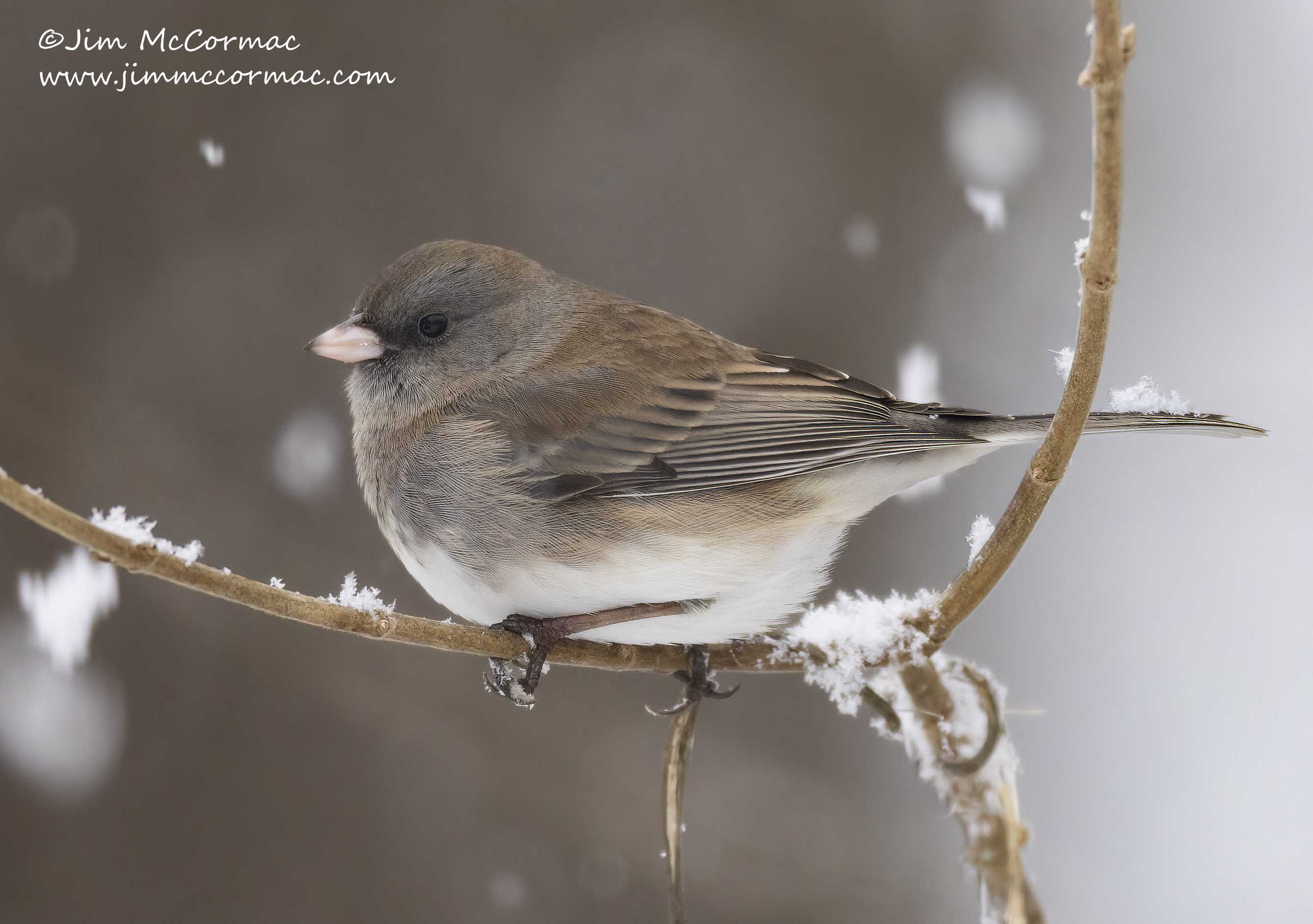
Unlike many of its sparrow brethren, which are skulkers and shrinking violets, dark-eyed juncos are extroverted and easily observed. Adult males are a rich dark slate color above, with snowy underbelly and a pink bill. Their white tail feathers are often flashed conspicuously. Females and juveniles are more muted and infused with brownish hues.
There are plenty of dark-eyed juncos to see. The population, which breeds strictly in the U.S. and Canada, numbers about 630 million individuals, or about two juncos for every person. While juncos nest throughout the boreal forest of the northern U.S. and Canada, birds in northerly populations retreat southward in winter. These are the birds that we see at our feeders.
Ohio lies at the southern limits of the junco’s breeding range, with isolated nesters in the extreme northeast, especially Geauga and Lake counties. A small population breeds in Mohican state forest. But if you receive juncos at your feeders, the likelihood is that they hail from remote northern forests.
Over its vast North American range, the dark-eyed junco varies markedly in appearance. So much so that until 1973 it was divided into five species: gray-headed junco, Guadalupe junco, Oregon junco, slate-colored junco (our birds), and white-winged junco. Typical examples of each form are easily identified, but they all hybridize and produce fertile offspring, which is why the five were lumped into one species. The Oregon subspecies appears rarely but regularly in Ohio. Adults are recognizable by a black hood that contrasts with pinkish-brown flanks.
If you feed birds, you’ll almost certainly attract juncos. The jaunty little sparrows usually feed on the ground, often flashing their bright white tail feathers. Many species of birds that are habitual ground-foragers have white outer tail feathers. One explanation is that it presents a false flag to bird-hunting raptors like Cooper’s and sharp-shinned hawks. The raptor fixates on the junco’s bright tail feathers, seizes those, and the junco escapes, sans tail. But tail feathers grow back, and the junco lives to see another day.
The roughest of winter weather does not deter tough juncos. They essentially live in a sleeping bag of feathers, the dense down feathers shingled over by sturdy waterproof contour feathers. Juncos can stave off the coldest of Ohio temperatures. If snow covers food sources, they kick through it like little chickens to uncover the seeds.
Come mid-March, dark-eyed juncos start their northward journey. By May, nearly all of them have moved north, leaving us with to deal with a five-month junco hiatus. Throw some seed out for the snowbirds, and enjoy them will you can.
Naturalist Jim McCormac writes a column for The Dispatch on the first, third and fifth Sundays of the month. He also writes about nature at www.jimmccormac.blogspot.com.
Monday, October 23, 2023
Fall colors
Fall colors were not yet peak, and if high winds don't remove most of the leaves between now and then, I would say that next weekend should be prime time to observe fall leaf color, at least in central and southern Ohio.
Thursday, October 19, 2023
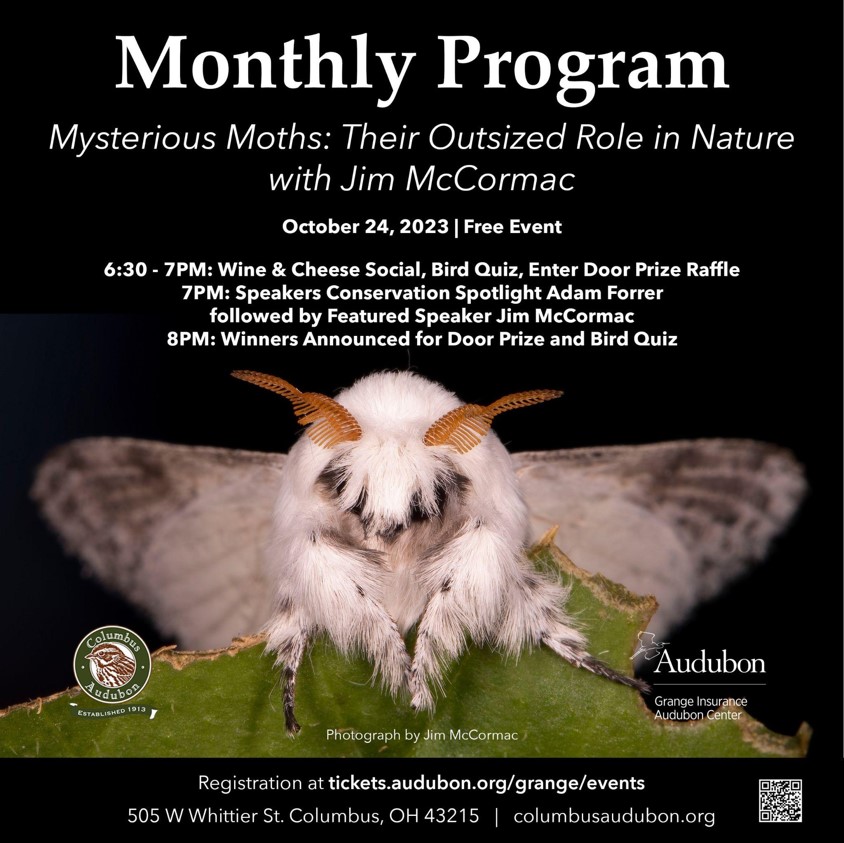
Moth Talk: October 24, Columbus, Ohio. All are welcome!
This talk is loosely based on the new(ish) book Gardening for Moths, by Chelsea Gottfried and me. That book (hit the shelves in late March 2023) features a robust introduction that makes the case as to why moths are important. And that's mostly what I will do with this talk: build the case for the importance of moths and how they interplay with bats, birds, other animals, our native flora, and more. Our (mostly) nocturnal butterflies are fascinating on many levels, and do not get nearly the attention that they deserve.
This LINK has all of the details that you need. Would love to see you there!
Tuesday, October 17, 2023
Rough green snake spotted in southern Ohio
While 26 snake species slither about in the Buckeye State, they are largely out of sight and mind. That’s probably a good thing to many people, as ophidiophobia (human fear of snakes) is quite common. More importantly, it’s far better for the snakes that relatively few people clap eyes on them. Humans are, by far, a snake’s worst enemy.
Bad PR for serpents began at least as far back as the Bible, which is rich in anti-snake passages. Snakes are clearly used as a metaphor for evil, which is entirely underserved. The popularity of that ancient tome has colored people’s perceptions of one of our most interesting animal groups for millennia.
We directly persecute snakes, for no good cause. In Ohio, the overwhelming majority of our reptilian wrath is directed at non-venomous species, which constitute 23 of our 26 species. Common victims of humanoid malice are species like the eastern gartersnake and gray ratsnake.
Both species are utterly harmless. Even the three venomous species in Ohio are generally quite mellow. I’ve encountered the eastern copperhead, Massasauga (rattlesnake) and timber rattlesnake numerous times over the years, and in all cases their docility was notable.
One must work to run afoul of a snake. Far easier to leave them be, which is just how they would have it.
To me and many of my comrades, encountering snakes of any species is always a highlight of an outing. But a northern rough green snake (Opheodrys aestivus)? Rare indeed will be the animal that will one-up that experience.
Back on Sept. 8, I and 15 or so others were ambling along an old road through Shawnee State Forest in southern Ohio. We were attending a native plant conference, and this was a nocturnal field trip to seek creatures of the night. Suddenly out of the dark came a shout. Denise Arnett Ruby had discovered a green snake!
Everyone rushed over to ogle the handsome serpent. Rough green snakes are diurnal, spending their days slinking through low branches of trees and shrubs seeking caterpillars, crickets, spiders and other invertebrate fare. When threatened, the lime-green snake freezes and becomes nearly impossible to see amongst the foliage.
Green snakes sleep at night and are often easier to find under a flashlight beam. That’s how Denise spotted this one, and we were all beneficiaries. It was a “life snake” for nearly the entire group.
All 26 species of Ohio’s snakes have declined since the arrival of settlers, many of them alarmingly so. The rough green snake has probably decreased more than most. It is a southerner at the northern limits of its range in southern Ohio. Historically, it was documented in 14 counties. Now, it is only known to be in five.
Direct human persecution probably isn’t a major factor in this case. Highly arboreal green snakes are just too secretive and hard to spot and tend to occur in sparsely populated areas. They favor woodland edges and forest openings, and that’s the habitat I’ve seen all of the 15-20 individuals I’ve encountered over the years.
Forestry management practices, particularly logging, has undoubtedly decreased their numbers. In addition to degradation of the green snake’s woodland habitat, logging operations can destroy or damage nest sites: hollow logs, tree cavities, deep leaf litter, rocks etc. Outright development of forested habitat, or conversion of woods to agriculture or other open habitats, is likely even a bigger factor in the snake’s decline.
Our green snake was a bit perturbed at being roused from its slumber, and wriggled about for a bit. It eventually settled in and allowed the group to closely inspect it and get photos. The snake made no effort to bite, and such an attempt would be rare indeed. I’ve handled a number of them and not one has tried to strike.
Conservation of large, wooded ecosystems such as the 70,000-acre Shawnee State Forest is essential to protecting sylvan creatures such as the rough green snake. That also applies to wise forest management, which should include conservation of all native biodiversity.
Naturalist Jim McCormac writes a column for The Dispatch on the first, third and fifth Sundays of the month. He also writes about nature at.jimmccormac.blogspot.com.
Wednesday, October 11, 2023
A fine toad
Our group ran across this whopper of an American Toad (Anaxyrus americanus) while on a nocturnal field trip in Shawnee State Forest (Scioto County, Ohio) on September 10, 2023. I could not resist making images of the big amphibian, and the toad cooperated nicely as they often do. Of course, I toad her not to move and fortunately she toad the line nicely. I've got scads of toad imagery, but can seldom resist new portraits, especially when the model is as fine as this one was.
I do appreciate the articulating back screen of my camera (Canon R5), which allowed me to set the camera on the ground for the shot and still see the composition by merely folding the screen out and looking down at that. To further ease the task, I have the touch screen set so that when I touch a spot on the screen, the camera automatically focuses on that spot then takes the image. This is all getting almost too easy.
I've spent my fair share of time in pre-articulating screen days prostrate on hard rocky substrates to get on my subjects' level, and that ain't much fun. I have zero qualms about going prostrate for photos and do so all the time. In fact, it's one of my favorite positions for photographing wee beasts, as it's important to be on your subject's level. But going flat on those hard rocky roads with big pebbles jabbing you? No thanks and I'm grateful for camera technology that sometimes makes that unnecessary.
Thursday, October 5, 2023
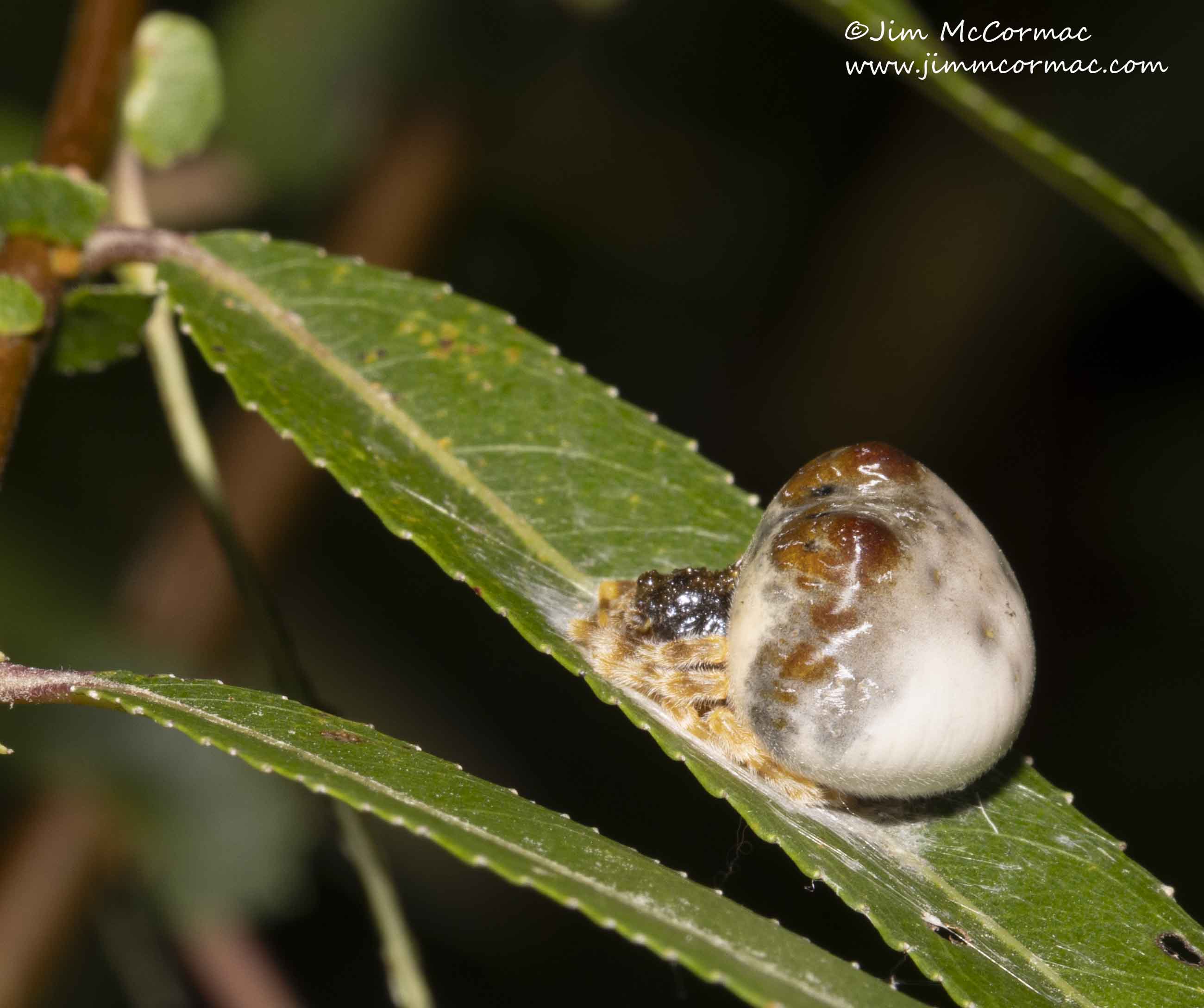
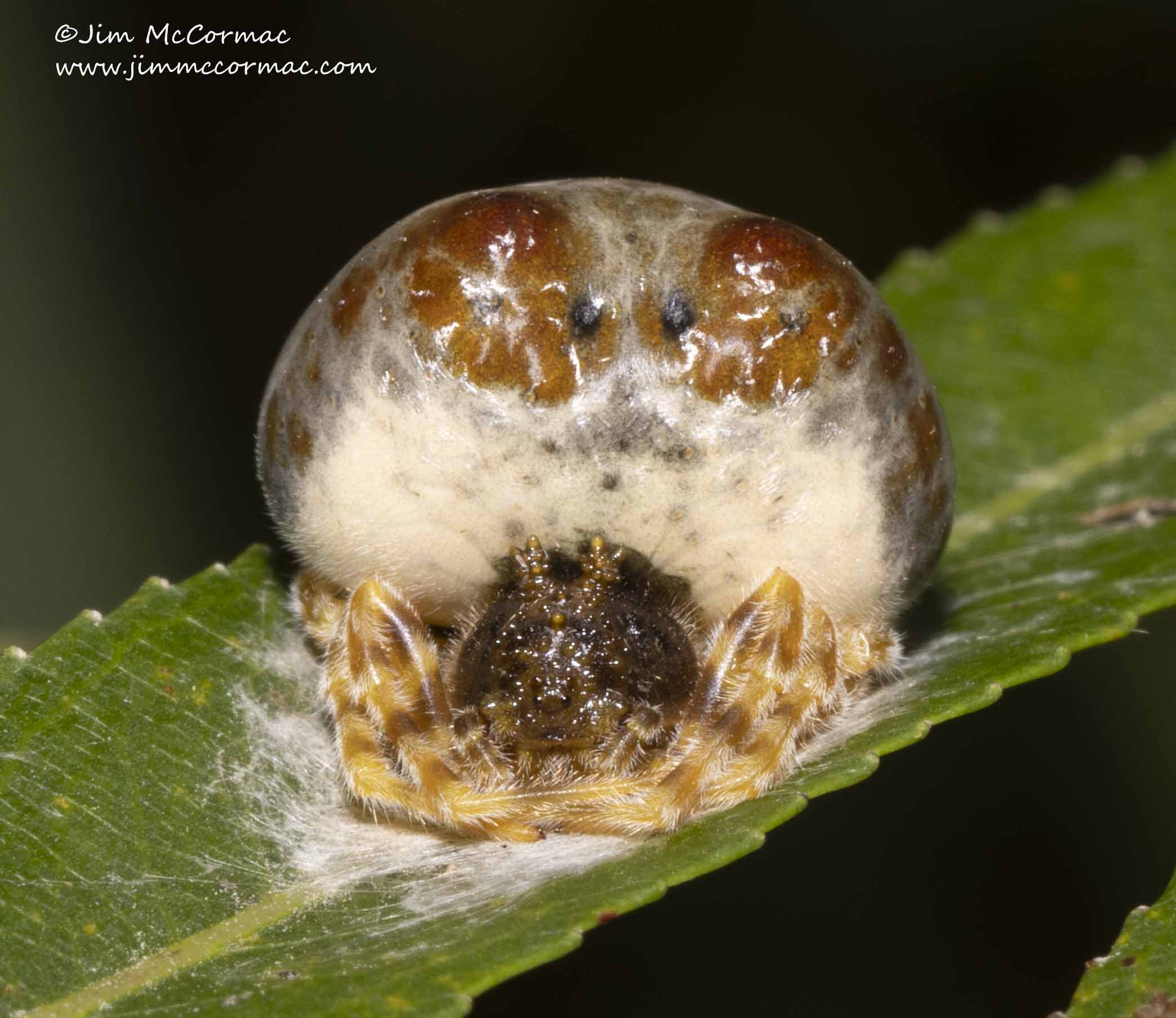
American Bolas Spider
Back on September 14, I visited an interesting property in rural Pike County, Ohio (well, I guess nearly ALL of Pike County is rural) to assist with a one-year bioblitz project spearheaded by John Howard. I'd been trying to get there all summer, but this is the year of talks for me, thanks to the new Gardening for Moths book, and the speaking gigs have thrown wrenches in many plans (but I'm not complaining).
John and the scores of experts he's had to the property have found a mountain of species, and I'll hope to report on that after the project has concluded. John, Stefanie Paeg and I roamed the property most of the day and managed to extricate some new species for the list - mostly insects and plants. Later, spider expert Rich Bradley joined us, as did Laura Hughes and Vince Howard. Towards day's end, photographer Sam James finally caught up with us way out on the trail, and shared news of a great find that he made soon after heading out on foot.
%20copy.jpg)


%20copy.jpg)


%20copy.jpg)
%20copy.jpg)
%20copy.jpg)
%20copy.jpg)
.jpg)